 Bulgaria
  Greece
  Turkey
  Romania
  Serbia
  N. Macedonia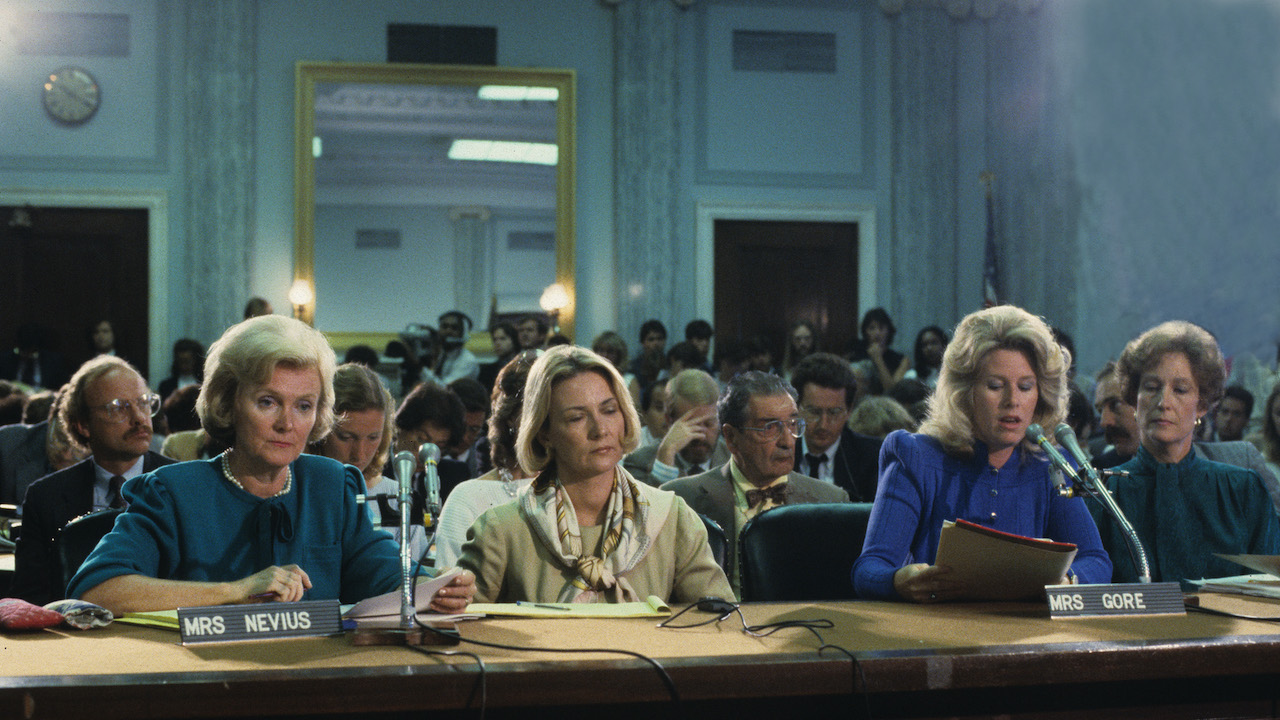
This week Bulgaria learned with horror of the brutal killing of a man in Plovdiv. Some of the detained teenagers appeared in court wearing Pantera and Sepultura t-shirts, which once again raised a public question: can heavy music explain such cruelty? As journalists covering the case themselves note, no — music alone rarely explains a crime. But the topic isn't new. Four decades ago, America asked itself almost the same question about heavy metal, and history's answer is telling.
In 1985, something happened in the United States that seems almost surreal today.
A group of influential Washington mothers decided that the American music industry had gone too far.
Too much sex. Too much violence. Too many drugs and alcohol. Too much satanism and occultism. And worst of all — all of it accessible to children.
At the head of the campaign stood a woman who was certainly no ordinary American housewife. Her name was Mary Elizabeth "Tipper" Gore — wife of Democratic Senator Al Gore, who would later become Vice President of the United States under Bill Clinton.
In 1985, she and several other influential women founded the Parents Music Resource Center — PMRC. And so began one of the most famous battles between American conservative morality and freedom of artistic expression.
It all started with a cassette of "Purple Rain"
The story begins in an almost comical way. Tipper Gore bought Prince's album "Purple Rain" for her 11-year-old daughter Karenna. The reason was entirely innocent — the child liked Prince's music. But the album contained one song that would change American music history: "Darling Nikki."
The song contains explicit sexual references, including to female masturbation. Tipper Gore was shocked. She began speaking publicly about how parents could buy an album for their children without knowing what was on it. This very incident became one of the main triggers for the creation of the PMRC.
And here the first great paradox appears. "Purple Rain" was not some obscure metal album sold in a small shop — it was one of the best-selling albums of the '80s. And "Darling Nikki" wasn't even a single. Yet this song became the spark that ignited America's entire war over music censorship.
PMRC and the "Washington Wives"
Tipper Gore did not act alone. Among the founders was Susan Baker — wife of James Baker, at the time one of the most influential figures in the Reagan administration. Thus formed the group that journalists began calling the "Washington Wives."
This is extremely important, because the PMRC was no ordinary parents' organization. Behind it stood the wives of influential politicians with direct access to Congress and political power.
They launched a campaign to introduce warning labels on music recordings. The initial idea was to have categories: S — Sex, V — Violence, O — Occult, D/A — Drugs/Alcohol.
So that a parent could look at the cover and understand: "This album contains sex." "This one contains violence." "This one contains occultism." "This one talks about drugs."
On the surface it sounds reasonable. The problem is who decides what is "sexual," "violent," "occult," or "dangerous." And the even more important question: what happens to music that receives such a label?
Because a store might simply decide: "We won't sell this." A radio station might say: "We won't play this." And a record company might decide: "Better to change the song than create problems for ourselves." That is exactly the musicians' great fear.
The "Filthy Fifteen"
The PMRC compiled a list of 15 songs it considered among the most objectionable examples. And here it gets interesting, because the list shows just how strange the understanding of "dangerous music" really was.
1. Prince — "Darling Nikki" (category X — sex)
This is the song that started it all. Prince describes a sexually aggressive woman he meets in a hotel. For the PMRC, this was proof that the music industry was selling explicit sexuality to children. For Prince, it was simply part of his artistic image — provocative, sexual, ambiguous, and often deliberately scandalous.
Consequences for Prince: Paradoxically — almost none negative. On the contrary, the scandal made the song even more famous. "Purple Rain" was already a massive hit, and the controversy around "Darling Nikki" further turned Prince into a symbol of sexual freedom and artistic provocation. As TIME noted, the bad publicity at the time actually worked in Prince's favor.
This is the first lesson of the campaign: when you try to hide a song, sometimes you just advertise it for free.
🎥 Prince & The Revolution — Darling Nikki (Official Audio)
2. Sheena Easton — "Sugar Walls" (category X — sex)
Here the PMRC targeted not a metal band, but a pop singer. "Sugar Walls" is a sexually suggestive song written by Prince — under the pseudonym Alexander Nevermind, to conceal his authorship, an interesting detail since Prince actually has more than one connection to the "Filthy Fifteen." The song, performed by Sheena Easton, became a major hit, reaching #9 on the Billboard Hot 100.
Consequences: Easton wasn't destroyed by the scandal — quite the opposite, the song remained part of her catalog. The controversy showed something important: the PMRC was no longer fighting only "metalheads." Pop artists were targeted too, which turned the campaign into a national cultural dispute rather than just a fight between Christian parents and heavy metal.
🎥 Sheena Easton — Sugar Walls (Official Music Video)
3. Judas Priest — "Eat Me Alive" (category X — sex)
Now we enter heavy metal proper, and with one of the genre's greatest bands. Judas Priest were accused of "Eat Me Alive" containing sexually aggressive and sadomasochistic content. The song is from the 1984 album "Defenders of the Faith."
Consequences for Judas Priest: One must be careful here — the PMRC didn't destroy Judas Priest's career, but the band gradually became one of the symbols of "dangerous heavy metal." This had far more serious consequences a few years later: in 1990, Judas Priest found themselves in a court trial (in Reno, Nevada) in which parents claimed the band's music and alleged "hidden messages" led to a suicide attempt by two young men. The court did not accept the theory of the band's responsibility, but the trial became one of the most famous examples of the attempt to shift responsibility for young people's behavior onto rock music.
So "Eat Me Alive" is just one part of a much bigger story.
🎥 Judas Priest — Eat Me Alive (Official Audio)
4. Vanity — "Strap On 'Robbie Baby'" (category X — sex)
Vanity is the stage name of Denise Matthews, known mainly for Vanity 6 and her connection to Prince's musical world. Unlike most of her earlier songs, however, this particular track from the album "Wild Animal" (1984) was not written by Prince, but by Bill Wolfer and Vanity herself. The song is explicitly sexual, and for the PMRC it was an obvious example of content that shouldn't reach children.
Consequences: There's no dramatic story here as with W.A.S.P. or Twisted Sister. Vanity didn't lose her career because of the PMRC. But her inclusion on the list shows just how broad the understanding of "unacceptable music" was — from hard rock to pop and R&B.
🎥 Vanity — Strap On 'Robbie Baby' (with lyrics)
5. Mötley Crüe — "Bastard" (category V — violence)
Mötley Crüe were placed in the "violence" category. An interesting choice — this wasn't about explicit sexual lyrics, but about perceiving the language of aggression as potentially dangerous for young people. Mötley Crüe were, at the time, one of the most scandalous bands of American glam metal, and "Bastard" is from the album "Shout at the Devil" (1983).
Consequences: The PMRC didn't actually manage to stop them — rather, it made them an even brighter symbol of "dangerous rock." This is the recurring pattern throughout the whole campaign: the more adults said "don't listen to these people," the more interesting they became to teenagers.
🎥 Mötley Crüe — Bastard (Official Audio)
6. AC/DC — "Let Me Put My Love Into You" (category X — sex)
AC/DC were already a global rock institution. The song is from "Back in Black" — one of the best-selling rock albums in history. The PMRC labeled it sexual content. And here a rather amusing question arises: why this particular song? AC/DC have a huge catalog with far more obvious sexual innuendo.
Consequences: Practically none for the band's career. AC/DC kept filling stadiums. But they gained one more reason to be seen as part of "forbidden" rock.
🎥 AC/DC — Let Me Put My Love Into You (Official 4K Video)
7. Twisted Sister — "We're Not Gonna Take It" (category V — violence)
And here the story becomes wonderful. Because if someone hears "We're Not Gonna Take It" today, it's hard to imagine why the PMRC labeled it a song about violence. It's an anthem of defiance: "We're not going to put up with this anymore." The song is about rebellion against authority, and the PMRC saw in that a potential incitement to violence. This is exactly where Dee Snider enters the story.
🎥 Twisted Sister — We're Not Gonna Take It (Official Music Video)
Dee Snider vs. Washington
On September 19, 1985, the famous Senate hearing took place. Three musicians appeared before the committee: Frank Zappa, Dee Snider, and John Denver.
An incredible trio. Frank Zappa — the provocateur. Dee Snider — the metal frontman. John Denver — the man almost no one would call a "satanist." All three defended freedom of artistic expression.
Dee Snider showed up in his typical rocker look of the time — jeans, denim vest, long hair. And he began dismantling the PMRC's arguments. Most interesting is that he didn't just speak emotionally — he was extremely well prepared.
He explained that "We're Not Gonna Take It" was not a song calling for violence. And "Under the Blade" (from the band's 1982 debut album), which had also been attacked by the PMRC — the organization claimed the lyrics described sadomasochism, bondage and rape — was not about such themes either. Snider explained the song was actually about a throat operation that the band's guitarist, Mark Mendoza, had to undergo.
This is one of the most powerful moments in the history of music censorship, because Snider demonstrated something very important: the people condemning a work sometimes hadn't even understood it.
🎥 Twisted Sister — Under the Blade (Official Audio)
8. Madonna — "Dress You Up" (category X — sex)
And here the PMRC ran into someone who had no intention of backing down. Madonna was already building her image around sexuality, religion, provocation, and taboo-breaking. "Dress You Up" is a far more innocent song than several of her other works — which is exactly what makes the choice interesting.
Consequences: Practically none. Madonna kept becoming an ever-bigger star, and from then on, sex, religion, and provocation became core elements of her public image. The PMRC didn't stop her — it just gave her one more reason to be "scandalous Madonna."
🎥 Madonna — Dress You Up (Official Music Video)
9. W.A.S.P. — "Animal (Fuck Like a Beast)" (category X — sexual content)
Here we finally have a real consequence for a band. W.A.S.P. were exactly what the PMRC probably had in mind when talking about "dangerous rock." Blackie Lawless. Shocking stage visuals. Sexual lyrics. Blood. Provocation. And a song title that could hardly be presented as a children's tune.
Fun fact: according to Blackie Lawless himself, the idea for the song came while looking at a photo of mating lions in National Geographic magazine.
"Animal (Fuck Like a Beast)" was recorded in 1984, but Capitol Records, worried about retailer backlash, pulled it from the US edition of the debut album. The song became one of the most famous casualties of the moral panic around heavy metal. In the US, the studio version was officially released only with the album's 1998 reissue.
The irony: that exact song helped build the legend of W.A.S.P. Today "Animal" is not just a song — it's part of the history of censorship in rock music.
🎥 W.A.S.P. — Animal (Fuck Like A Beast)
10. Def Leppard — "High 'n' Dry (Saturday Night)" (category D/A — drugs and alcohol)
Def Leppard were accused of the song encouraging drug and alcohol use. This is especially interesting because Def Leppard were, at the time, on their way to becoming one of the biggest rock bands on the planet.
Consequences: There's no evidence the PMRC did any serious lasting damage to their career. But the song is illustrative of how the PMRC viewed rock culture: alcohol wasn't just a topic — romanticizing it at all was seen as a danger to young people.
🎥 Def Leppard — High 'N' Dry (Saturday Night)
11. Mercyful Fate — "Into the Coven" (category O — occult)
Here we enter the favorite territory of the so-called Satanic Panic. Mercyful Fate were one of the most obvious targets for such an attack: King Diamond, occult symbols, demonic imagery, black magic, and lyrics that made no attempt whatsoever to seem "proper."
Consequences: For Mercyful Fate, the scandal was more a part of their identity than a threat. They weren't trying to please the PMRC — and that's exactly the point. Instead of being scared off by the accusations, such bands started leaning even harder into occult aesthetics. In this way, the moral panic became part of heavy metal's marketing.
🎥 Mercyful Fate — Into the Coven
12. Black Sabbath — "Trashed" (category D/A — drugs and alcohol)
Black Sabbath were already legends. The band had been active for over a decade. "Trashed" is a song about alcohol, a car crash, and recklessness — and the lyrics have a real origin: vocalist at the time Ian Gillan wrote the words after taking drummer Bill Ward's car without permission and crashing it during a drunken joyride around the studio grounds while recording the album "Born Again" (1983). The PMRC used the song as an example of material that normalized alcohol use.
Consequences: For Black Sabbath — practically none, they were already too big. But their inclusion shows something else: the PMRC made no distinction between artistic description and propaganda. If a musician sings about drugs, does that mean they're promoting them? If they sing about murder, does that mean they're calling for murder? If they sing about the devil, does that mean they believe in him? These questions remain unresolved.
🎥 Black Sabbath — Trashed (Official Audio)
13. Mary Jane Girls — "In My House" (category X — sex)
This is yet another example that the PMRC didn't only go after heavy metal. Mary Jane Girls were an R&B/pop group created by Rick James as his protégée project — in a way similar to how Prince built Vanity 6. "In My House" is a sexually suggestive song, and the PMRC included it on the list; in reality it became the group's biggest hit, reaching the top 10 on the Billboard Hot 100.
Consequences: No catastrophic blow to the group is observed. But the song is proof of one of the core problems with the "Filthy Fifteen": the criteria were so broad that completely different musical worlds ended up on the same list — Prince, Madonna, Cyndi Lauper, AC/DC, Black Sabbath, Venom. Quite a strange lineup.
🎥 Mary Jane Girls — In My House (Official HD Video)
14. Venom — "Possessed" (category O — occult)
Venom were an even more extreme case than Mercyful Fate — among the bands that practically laid the foundation of extreme metal culture. Their aesthetic was deliberately blasphemous and satanic, and the song (from the album of the same name, released April 1, 1985) was ranked #14 on the PMRC's list.
Consequences: Here too, the PMRC's attack actually helped the band build its legend. For a young metal fan in 1985, learning that "Washington considers this band dangerous" could be reason enough to seek it out. This is the phenomenon later known as the Streisand effect: trying to restrict information can spark even greater interest in it.
🎥 Venom — Possessed (Official Audio)
15. Cyndi Lauper — "She Bop" (category X — sex/masturbation)
And here we have one of the funniest examples. Cyndi Lauper seems like the absolute opposite of W.A.S.P. — colorful, cheerful pop star, author of "Girls Just Want to Have Fun." And yet "She Bop" ended up on the "Filthy Fifteen."
The reason is that the song contains veiled references to female masturbation. Lauper later explained the lyrics were deliberately written so children could take it as a song about dancing, while adults understood the real meaning. The song reached #3 on the Billboard Hot 100 in September 1984.
Consequences: The song became a hit. And that's yet another blow against the PMRC's logic — because instead of being erased from music history, "She Bop" remains one of the well-known hits of the '80s.
🎥 Cyndi Lauper — She Bop (Official HD Video)
Then came September 19, 1985
This is the day that turned the story into legend. The Senate heard representatives from the PMRC, the music industry, and musicians. And here we should note something important: Congress did not ban music. The First Amendment to the Constitution protects freedom of speech.
But the legislative pressure was very real. The music industry understood it had a problem. And record companies had other interests before Congress too — for example, legislation on home taping and blank cassette tapes. Suspicions arose within the industry that the RIAA was willing to compromise partly to gain political support on other issues.
Frank Zappa — the man who turned the hearing into a circus
Frank Zappa was perhaps the PMRC's most natural enemy. He didn't just defend music — he mocked the very idea that the state or politically connected groups should decide what art is acceptable.
Zappa understood something very important: today you censor sex, tomorrow violence, then religion, then political opinion. And the line keeps shifting.
John Denver — heavy metal's most unexpected ally
And here lies a beautiful irony. John Denver was not Blackie Lawless. Not Dee Snider. Not Ozzy Osbourne. He was the man behind "Take Me Home, Country Roads." Yet Denver too opposed the idea of censorship and warning categories.
This matters because it shows the dispute wasn't "metal vs. Christians," but "freedom of artistic expression vs. control over content."
And yet the PMRC won something
If we say "the PMRC failed completely," that wouldn't be true. It didn't get legal censorship, but it did manage to change the music industry.
In November 1985, the RIAA and parents' organizations reached a compromise. Recordings could be labeled with a warning sticker. The initial wording was "Parental Advisory — Explicit Lyrics," or alternatively, lyrics could be printed so buyers could judge the content for themselves.
Later the system was revised, gradually arriving at the familiar sign we know today:
PARENTAL ADVISORY
EXPLICIT CONTENT
The RIAA still describes the system as a voluntary program today.
But then something happened that the PMRC probably hadn't foreseen
The sticker turned into advertising. A teenager walks into a record store. Sees two albums. One has no sticker. The other has a huge black-and-white label: PARENTAL ADVISORY. Which one looks more interesting?
Exactly that happened. For many young listeners, the warning stopped being a warning — it became a mark of quality. "This is obviously something my parents don't want me to listen to." Therefore: I need to hear it.
The greatest irony
The PMRC wanted to protect children from music. But in a sense, it helped create one of the most recognizable visual symbols of rebellious music.
Parental Advisory came to mean not just "Warning, indecent content." For part of the audience, it began to mean: "There's something forbidden here." And forbidden is always interesting.
What happened to the "Filthy Fifteen"?
The most interesting thing is that if we look at the list today, it seems almost comical: Prince, Sheena Easton, Judas Priest, Vanity, Mötley Crüe, AC/DC, Twisted Sister, Madonna, W.A.S.P., Def Leppard, Mercyful Fate, Black Sabbath, Mary Jane Girls, Venom, Cyndi Lauper.
Half of these artists are music legends. And many of the songs the PMRC presented as especially dangerous are today historical documents of the '80s.
Some are classics. Some are simply fun songs. Some really are extremely sexual. Some really do talk about drugs. Some are deliberately satanic. But the big question was never whether the lyrics were "filthy" — they truly are. The question is: should the state, politicians, or the industry decide instead of the parent what a child can listen to? And further: can a work be dangerous simply because it describes something dangerous?
And what about Tipper Gore?
Here we should be a bit more careful with the label "hypocritical" or "overly pious." We can freely criticize her actions and ideas, but it's historically more accurate to say that Tipper Gore was convinced that popular culture negatively affected children, and that parents should get more information about music content. She herself presented the campaign as a way to inform parents, not as an attempt to introduce direct government censorship.
And that's exactly where the stronger critique lies. We don't need to call her stupid or hypocritical. The more interesting question is: how does a perfectly understandable parental worry turn into a political campaign? Because that's a far more universal problem.
And what were the real consequences for the 15 artists?
Serious direct impact:
• W.A.S.P. — "Animal" was pulled from the US edition of the debut album and faced serious distribution problems.
• Judas Priest — the band found itself at the center of a broader moral panic around heavy metal, later including the court trial over alleged "subliminal" messages.
• Several other metal bands began facing problems with retailers, radio stations, and promotion.
Weak or temporary effect: Def Leppard, Mötley Crüe, AC/DC, Twisted Sister, Mercyful Fate, Black Sabbath, Venom.
Practically no long-term negative effect: Prince, Madonna, Cyndi Lauper, Sheena Easton, Mary Jane Girls, Vanity.
And this is extremely important: the PMRC never managed to destroy the career of any of the major stars on the "Filthy Fifteen."
And here comes the biggest paradox
Looking at the story from today's perspective, the PMRC did indeed change the music industry — but not in the way its organizers probably imagined.
They wanted control. They got a label. And the label turned into a marketing tool.
They wanted children not to be exposed to certain music. They got extra curiosity about that music.
They wanted parents to have control. They got a symbol that, for years, told teenagers "there's something here your parents probably won't like."
And the most important lesson?
The PMRC story isn't really about "silly American mothers." That would be too easy. It's a story about moral panic.
At different times, society picks a different "enemy." In the '50s, it was rock and roll. In the '60s — the hippies. In the '70s — pornography and television. In the '80s — heavy metal. Then — rap. Then video games. Then the internet. Then social media. Today we can see the same mechanism around TikTok, YouTube, video games, artificial intelligence, and whatever comes next.
The mechanism is always the same: "Children are exposed to something new and scary. This thing must be restricted."
The problem is there's a huge difference between "a parent should know what their child is watching" and "someone else should decide what a child is allowed to watch." And that exact boundary is the essence of the PMRC story.
And the final, perhaps most ironic picture
In 1985, a group of Washington mothers looked at rock music and saw danger. They saw sex. Drugs. Alcohol. Violence. Occultism.
Rock musicians saw something else: art, provocation, fantasy, theater, rebellion, and freedom.
And teenagers saw yet another thing: something adults didn't want to let them listen to.
And that is perhaps the PMRC's biggest mistake. They forgot one of the oldest laws of human behavior: when you tell a teenager "don't listen to that," their first question usually isn't "why?" It's: "Where can I find it?"
And so the "Filthy Fifteen" remains in history. Not as a list of 15 songs that were successfully stopped. But as a list of 15 songs that showed just how hard it is to draw a line between parental control, morality, political power, art, and freedom of speech.
Perhaps the greatest irony is that four decades later, almost no one remembers exactly what the PMRC wanted to ban or restrict. But millions of people around the world know the black rectangle well: PARENTAL ADVISORY — EXPLICIT CONTENT. The RIAA still describes it today as a voluntary mechanism for informing parents.
And for an entire generation of music fans, that sign turned from a warning into something quite different: "This is clearly worth hearing." 😄🤘